 Image 1 of 1
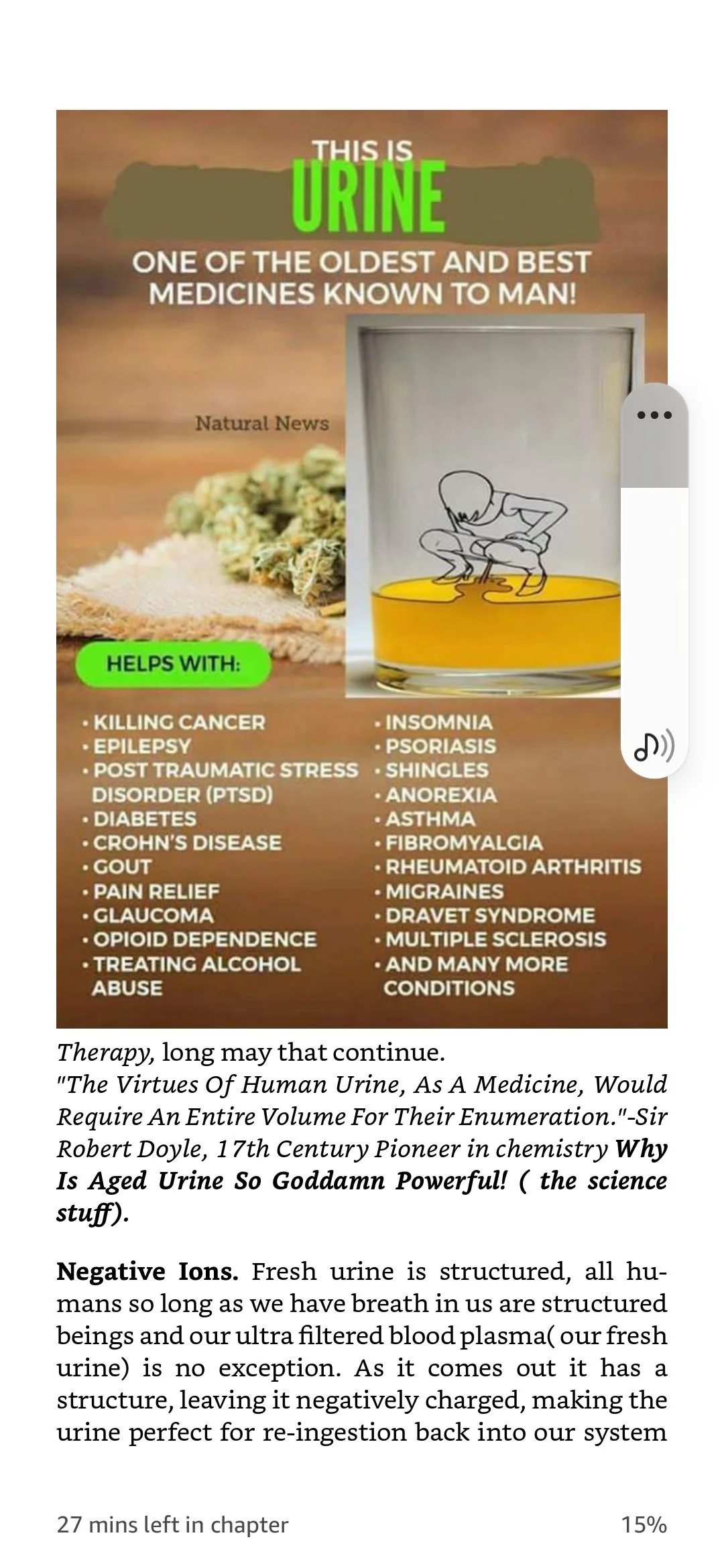
Urine therapy, also known as Amaroli in Ayurvedic tradition or urotherapy, is a practice involving the application or ingestion of one's own urine for purported health benefits. Because this is an unconventional practice not supported by mainstream medicine, coaches in this field usually focus on the following:
Protocol Guidance: They often provide specific instructions on "how" to start, such as using the "mid-stream" catch, timing (like the first morning urine), and whether to use it topically or orally. the use of aged urine and discussing when and how to use it and how to ferment your own.
Protocols of treatment. Assisting with what equipment that is most effective to use in different situations, what to buy, how to apply your own medicine.
Transition Support: Many people find the concept difficult to start. Coaches offer emotional support and tips for overcoming the "ick factor." Assisting in getting through social conformity, giving advice on how to apply this therapy in every scenario as urine smells and offends people.
Dietary Integration: Some coaches suggest specific diets (often high-fruit or plant-based) to supposedly improve the "quality" or taste of the urine.
Aged Urine Instruction: Some practitioners advocate for "aging" urine for topical use (skin conditions, hair growth) and provide methods for storing it.
Dosing Schedules: They may suggest "homeopathic" doses (a few drops) versus larger amounts based on their specific philosophy.
It is important to note that the medical community generally advises against the ingestion of urine. The primary risks discussed by health professionals include:
Re-introducing Waste: Urine contains salts, minerals, and metabolic waste products that the kidneys have already worked to remove from the body.
Dehydration: Because of its high salt content, drinking urine in a survival situation can actually accelerate dehydration.
Bacterial Growth: While urine is often thought to be sterile, it can pick up bacteria as it exits the body, and bacteria can multiply if it is "aged" or stored improperly.
Urine therapy, also known as Amaroli in Ayurvedic tradition or urotherapy, is a practice involving the application or ingestion of one's own urine for purported health benefits. Because this is an unconventional practice not supported by mainstream medicine, coaches in this field usually focus on the following:
Protocol Guidance: They often provide specific instructions on "how" to start, such as using the "mid-stream" catch, timing (like the first morning urine), and whether to use it topically or orally. the use of aged urine and discussing when and how to use it and how to ferment your own.
Protocols of treatment. Assisting with what equipment that is most effective to use in different situations, what to buy, how to apply your own medicine.
Transition Support: Many people find the concept difficult to start. Coaches offer emotional support and tips for overcoming the "ick factor." Assisting in getting through social conformity, giving advice on how to apply this therapy in every scenario as urine smells and offends people.
Dietary Integration: Some coaches suggest specific diets (often high-fruit or plant-based) to supposedly improve the "quality" or taste of the urine.
Aged Urine Instruction: Some practitioners advocate for "aging" urine for topical use (skin conditions, hair growth) and provide methods for storing it.
Dosing Schedules: They may suggest "homeopathic" doses (a few drops) versus larger amounts based on their specific philosophy.
It is important to note that the medical community generally advises against the ingestion of urine. The primary risks discussed by health professionals include:
Re-introducing Waste: Urine contains salts, minerals, and metabolic waste products that the kidneys have already worked to remove from the body.
Dehydration: Because of its high salt content, drinking urine in a survival situation can actually accelerate dehydration.
Bacterial Growth: While urine is often thought to be sterile, it can pick up bacteria as it exits the body, and bacteria can multiply if it is "aged" or stored improperly.